
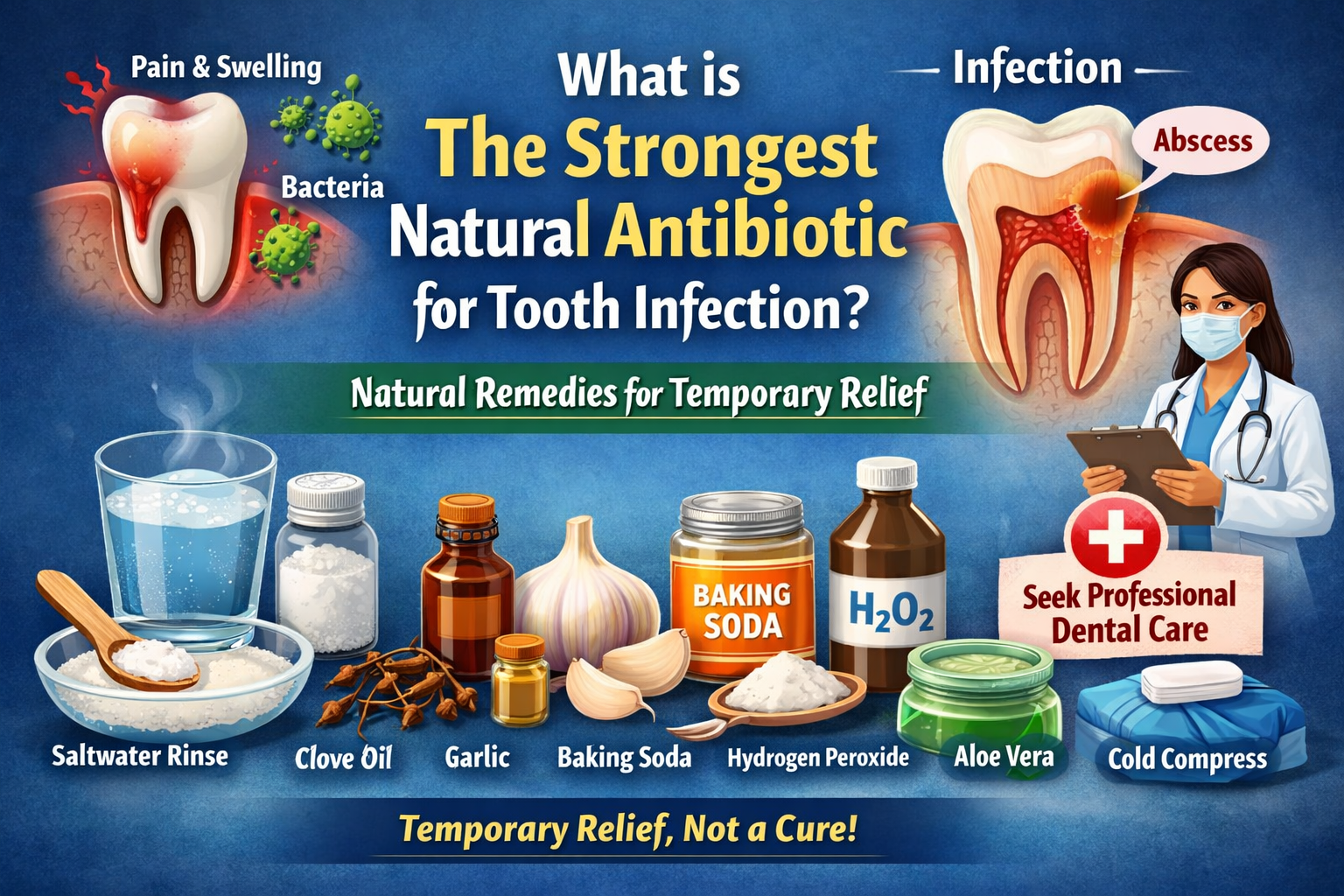
Dental infections are a common oral health problem that can cause severe pain and complications if left untreated. While professional dental care is essential for treating the underlying infection, home remedies for tooth infection can provide temporary symptom relief until your dental appointment. This comprehensive guide explores research-backed tooth infection home remedies, proper application methods, and critical information about when professional care becomes necessary.
What Causes Tooth Infections and What Makes Them More Likely to Happen
When harmful bacteria get past the protective layers of your teeth, they can cause dental abscesses. There are a number of things that can make you more likely to get these painful infections.
Main Factors That Contribute
When people don’t take care of their mouths properly, bacteria can grow. When you don’t brush and floss regularly, bacteria grow quickly, which causes decay and eventually infection.
Sometimes, work done on white teeth in the past can weaken them. Fillings, crowns, and root canals are examples of procedures that can unintentionally make the body more vulnerable to bacteria. Physical trauma that causes cracks or fractures makes it easier for bacteria to get inside.
What you eat has a big effect on your oral health. Sugar-rich foods and drinks give bacteria the energy they need to grow. These microorganisms make acids that slowly wear down enamel, making holes that germs can get into.
Bacteria build up in the spaces between teeth and gums that periodontal disease makes. As this condition gets worse, these spaces get deeper, letting infections get to the roots of teeth.
People with weak immune systems are more likely to get sick. Diabetes and autoimmune disorders are two examples of conditions that weaken the body’s natural defenses, making it harder to fight off bacterial infections.
Recognizing Signs of a Tooth Infection
Recognizing the signs of a tooth infection early allows for quick treatment and stops problems from getting worse.
Common Signs to Look Out For
A strong, throbbing pain that may spread to your jaw, neck, or ear could mean an infection. This pain often gets worse and stays with you instead of going away.
Sensitivity to temperature becomes more pronounced. Drinking hot coffee or eating cold ice cream can cause sharp, shooting pain in the tooth that hurts.
Swelling in the face, especially around the cheek or jaw, could mean that an infection is causing inflammation. This swelling can make it hard to move your face and make you feel worse.
If you have pressure sensitivity, chewing or biting hurts. When you put any pressure on the infected tooth, it may hurt.
Fever and other systemic symptoms are signs of a tooth infection that show your immune system is fighting the bacteria. If your lymph nodes in your neck or jaw are swollen, it means your body is also fighting off harmful microorganisms.
When an abscess breaks open and drains, some people taste salt and feel relief right away.
Important Warning: If you have trouble breathing or swallowing, you need to get emergency medical help right away. These symptoms mean that the infection is spreading beyond the tooth.
Natural Toothache Relief: Evidence-Based Home Remedies
These natural methods that are backed by research may help ease symptoms while you wait for professional dental care. These home remedies for tooth infection will only help for a short time and won’t get rid of the infection itself.
1. Natural Relief for Tooth Pain with Salt Water Rinse
This easy fix helps get rid of bacteria in your mouth and lowers inflammation.
Preparation: Mix half a teaspoon of table salt into half a cup of warm water and stir until the salt is completely dissolved.
Use: For two minutes, swish the solution around your mouth, paying special attention to the area that hurts. After rinsing, spit out the mixture. For best results, do this two to three times a day.
The warm saltwater helps reduce swelling, gives temporary pain relief, and speeds up healing by making it hard for bacteria to live there.
2. Baking Soda
Sodium bicarbonate has antibacterial properties that can kill harmful bacteria while also neutralizing acids that cause decay.
To get ready: Mix half a tablespoon of baking soda with a pinch of salt in half a cup of water and stir until the baking soda is gone.
How to use: Swish the solution around in your mouth for a few minutes, making sure it gets to all the places it needs to, especially the tooth or gum that hurts. Spit it out and rinse your mouth with plain water. Use it twice a day after brushing.
3. Clove Oil for Tooth Infection: Traditional Pain Relief
For hundreds of years, traditional dentistry has used clove oil for tooth infection because it is a strong antibacterial and pain reliever. This natural toothache relief method contains eugenol, a compound with numbing properties.
To get ready: Mix a few drops of clove essential oil with a carrier oil like olive or coconut oil to keep it from bothering you.
Use: Use a cotton swab to put the diluted mixture on the area that hurts. Let it sit for at least ten minutes before you rinse your mouth with warm water.
When using clove oil for tooth infection relief, always dilute properly to avoid tissue irritation.
4. Ice Pack
Putting cold on the outside of the body reduces swelling and numbs pain very well.
How to use: Put ice cubes in a clean, dry towel. For about fifteen minutes, press the compress against your cheek near the area that hurts. Do this a few times a day as needed.
5. Rinse with Hydrogen Peroxide
This common household antiseptic has antimicrobial properties that can help kill bacteria and speed up healing.
To get ready: Mix equal parts 3% hydrogen peroxide and warm water.
How to use: Swish the diluted solution around in your mouth for 30 to 60 seconds, then spit it out. After that, rinse well with plain water. Don’t ever swallow hydrogen peroxide.
6. Garlic
Allicin is a chemical found in fresh garlic that has been shown to kill bacteria and relieve pain.
Use: Crush a fresh garlic clove to get allicin out of it, then make a paste. Carefully apply to the area that hurts, but be careful because raw garlic can make gums hurt. Use with care and for a short time.
7. Oil Pulling
This old practice involves swishing oil around in your mouth to possibly kill bacteria.
How to use: Put one tablespoon of coconut oil in your mouth and swish it around for up to twenty minutes. Don’t spit into your sink because it can clog pipes. Instead, spit into a trash can. Warm water should be used to rinse your mouth.
8. Aloe Vera Gel
Aloe vera that is safe to eat has antibacterial properties and can help calm inflamed tissues.
Use: Get fresh gel from an aloe vera leaf or use food-grade gel. Apply directly to the tooth or gums that are hurting several times a day.
9. Tea with Fenugreek
This herbal remedy might help ease pain and swelling.
Preparation: Make fenugreek tea according to the directions on the package and let it cool down to a comfortable temperature.
How to Use: After the tea has cooled, use it as a mouth rinse by swishing it around your mouth and then spitting it out.
10. Essential Oils of Oregano and Thyme
Both oils have strong antibacterial properties that could help fight infection.
Preparation: Always mix essential oils with a carrier oil (a few drops of essential oil per teaspoon of carrier oil).
Use: Use a cotton swab to put the diluted mixture on the affected area, or add it to water to make a mouthwash.
Important Safety and Limitation Factors
Understanding is important when using tooth infection home remedies:
Tooth infections can’t be cured with natural remedies. The only way to get rid of the bacterial infection completely is to get professional dental care and take the antibiotics that your doctor gives you.
These natural toothache relief methods help with your symptoms for a short time while you make plans for professional dental care. They should never put off or skip a trip to the dentist.
Safety Measures
Before using essential oils, always mix them with something else. Undiluted oils can really hurt or burn the tissues in your mouth.
Do not swallow hydrogen peroxide or essential oils because they can be harmful if you do.
If you’re allergic to certain plants, herbs, or bee products, stay away from remedies that come from those sources.
Stop any treatment that makes your pain, irritation, or allergic reactions worse.
When You Need Professional Dental Care Right Away
If you have any of the following symptoms, you need to see a dentist or doctor right away:
Get Emergency Care If You Experience
- Severe pain that doesn’t go away with over-the-counter painkillers
- High fever along with tooth pain
- A lot of swelling in the face
- Having trouble breathing or swallowing
- Swelling that goes all the way to your eye or neck
- Jaw stiffness or not being able to open your mouth all the way
Make an Appointment with the Dentist Right Away For
- Pain that lasts longer than a day or two
- Tooth pain that gets worse or doesn’t get better
- Pus or discharge that can be seen around a tooth
- Lymph nodes that are swollen and painful
- Bad breath that won’t go away even with good oral hygiene
- Teeth that are stained or darkened
Choices for Professional Treatment
To effectively treat tooth infections, dentists use a number of different methods:
Some Common Treatments Are
Antibiotics: These are prescription drugs that kill the bacteria that are causing the infection. Finish the whole course, even if your symptoms get better.
Draining: If you have abscesses, your dentist will drain them to get rid of the infected material and give you immediate relief.
Root Canal Therapy: This treatment cleans the canal system, removes infected pulp from inside the tooth, and seals it to keep it from getting infected again. Even though it has a bad reputation, modern root canal treatment is pretty comfortable and works very well.
Extraction: If the tooth can’t be saved, it may need to be taken out to stop the infection from spreading.
Ways to Stop Tooth Infections
It’s much easier to stop tooth infections than to treat them:
Important Steps to Take to Avoid Problems
Use fluoride toothpaste to brush your teeth at least twice a day. Brush for at least two minutes, making sure to get all of your teeth.
Floss every day to get rid of plaque and food particles that toothbrushes can’t reach between teeth.
Cut back on sugary foods and drinks that help bacteria grow.
Go to the dentist every six months for regular checkups and cleanings, or as your dentist suggests.
Take care of dental problems right away. Don’t put off getting treatment for cavities, cracks, or other problems.
Drink enough water to keep your saliva production healthy, which cleans your mouth naturally.
Think about using an antimicrobial mouthwash every day.
Frequently Asked Questions
Can natural cures get rid of a tooth infection completely?
No. Natural relief for tooth pain methods may help with symptoms for a short time, but they can’t get rid of the bacterial infection or fix the problem at its source. To fully heal, you need professional dental care with antibiotics.
How soon should I go to the dentist if I think I have an infection?
As soon as you can. Infections in the teeth can spread quickly and cause serious problems. Call your dentist within 24 hours of noticing any symptoms.
Are natural remedies safe for everyone?
Most home remedies for tooth infection are safe when used correctly, but some people may have allergies, sensitivities, or medical conditions that make them unsafe. If you’re worried, talk to your doctor, especially if you’re pregnant, nursing, or have other health problems.
Can I use more than one natural remedy at a time?
Yes, a lot of people use both saltwater rinses and cold compresses at the same time. But don’t use any one remedy too much, and stop using anything that makes you feel bad.
Will painkillers you can buy without a prescription help?
Yes, drugs like ibuprofen and acetaminophen can help with pain and swelling. Follow the directions on the package and talk to your doctor about how this medicine might interact with other medicines you are taking.
Final Thoughts
Tooth infections need to be treated by a dentist to get rid of completely. While home remedies for tooth infection like saltwater rinses, clove oil for tooth infection relief, garlic, and other natural toothache relief methods may help with symptoms for a short time, they won’t get rid of the bacterial infection or stop complications from happening.
While you wait for professional dental care, use these tooth infection home remedies as extra help, not as replacements for it. Getting dental care right away protects your mouth health, stops infections from spreading, and treats the underlying cause of your symptoms.
The best way to avoid tooth infections is to keep your mouth clean, go to the dentist regularly, and fix any dental problems as soon as they come up. When an infection does happen, the best way to get better and stay healthy for a long time is to use temporary natural relief for tooth pain methods and get professional help right away.
Keep in mind that your dentist is there to help you keep your teeth and gums healthy. If you have tooth pain or think you might have an infection, don’t be afraid to call.


