
Understanding White Spots on Teeth: Causes, Prevention, and Treatment
Noticing white spots on your teeth can be concerning. These chalky patches stand out against your natural enamel, raising questions about what they mean for your oral health. While they might appear harmless, understanding their cause is essential for maintaining a healthy smile.
What Are White Spots on Teeth?
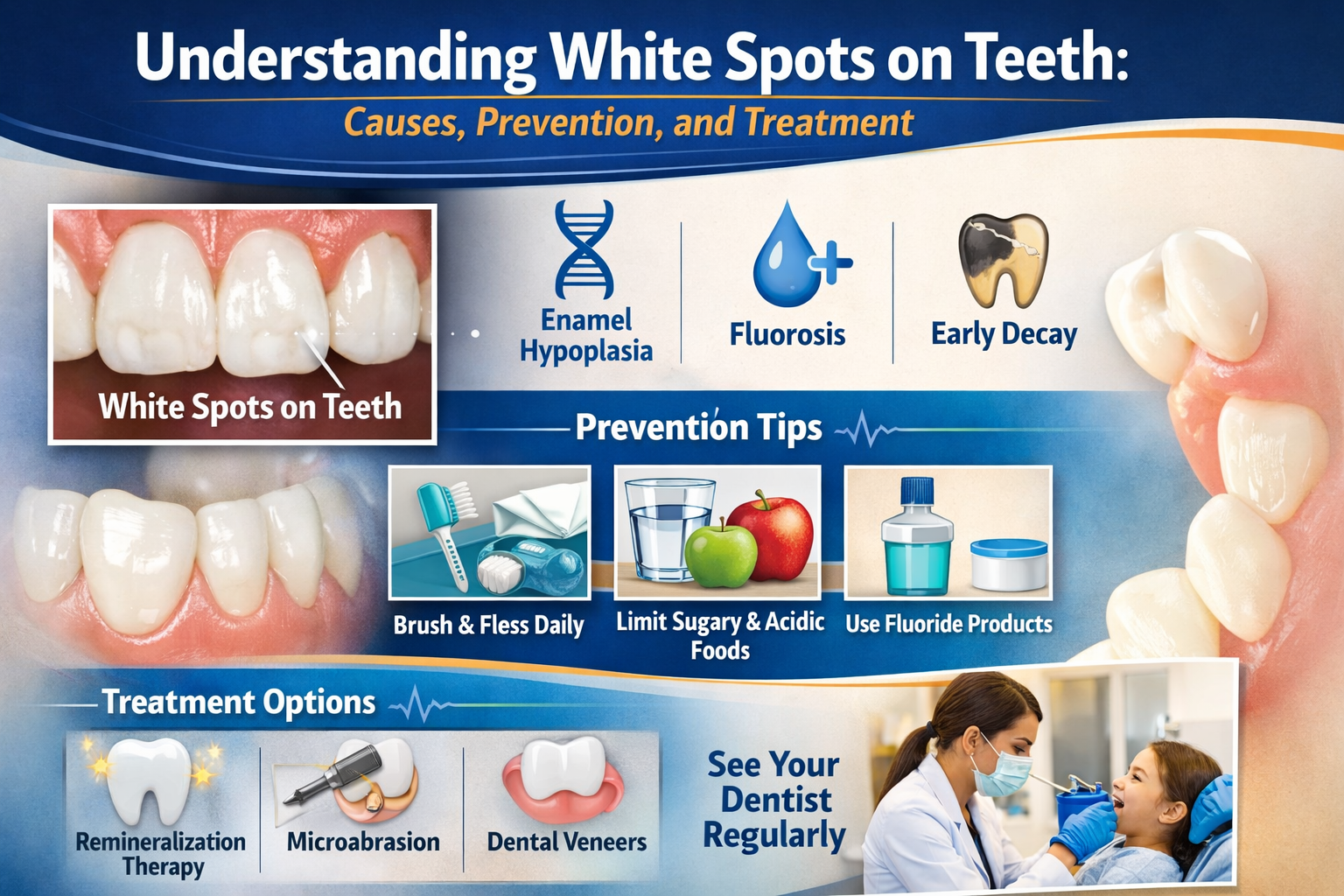
White spots appear as opaque, chalky patches that differ from the natural translucency of healthy enamel. They can develop on primary or permanent teeth and vary in size and location. Though they may seem purely cosmetic, these spots often indicate underlying dental concerns that deserve attention.
Common Causes of White Spots
Several factors contribute to white spot formation:
Enamel Hypoplasia
This developmental condition results in thin or improperly formed enamel. Genetic factors, nutritional deficiencies during tooth development, or premature birth can cause this permanent condition that leaves teeth vulnerable to staining.
Fluorosis
Excessive fluoride intake during childhood, when teeth are developing, creates white or mottled patches. While mild fluorosis doesn’t harm teeth functionally, it affects their appearance. Parents should use only a smear of fluoride toothpaste for young children to prevent overexposure.
Demineralization and Early Decay
When acids from plaque bacteria or dietary sources strip minerals like calcium from enamel, white spots emerge. This represents the earliest stage of tooth decay and serves as a warning sign. Unlike fluorosis, demineralization-related spots can be reversed with prompt intervention.
Dietary Factors
Regular consumption of acidic beverages (sodas, sports drinks, citrus juices) and sugary foods gradually erodes enamel. This acid attack weakens the protective outer layer, creating conditions for white spot formation.
Orthodontic Treatment
Braces make thorough cleaning challenging. When plaque accumulates around brackets and isn’t properly removed, demineralization occurs. These white spots often become visible after braces are removed, highlighting areas where cleaning was inadequate.
Are White Spots Always Decay?
Not every white spot signals active decay, but many represent early warning signs. Demineralization creates a chalky appearance before progressing to cavities. At this reversible stage, proper care can restore enamel health.
Other causes like fluorosis or hypoplasia aren’t decay-related but still warrant professional evaluation. A dental examination can determine the underlying cause and appropriate treatment approach.
Identifying Decay-Related White Spots
Several characteristics suggest white spots may indicate early decay:
- Texture changes: Rough or softened areas when touched
- Temperature sensitivity: Discomfort with hot, cold, or sweet foods
- Color progression: Spots turning brown or yellow over time
- Location patterns: Spots near the gumline or between teeth where plaque accumulates
Professional diagnostic tools like visual examination and radiographs can confirm whether spots represent decay or another condition.
Prevention Strategies
Protecting enamel requires consistent daily habits:
Daily Oral Care
Brush twice daily with fluoride toothpaste using proper technique. Spend two minutes ensuring all surfaces are cleaned thoroughly. Floss daily to remove plaque from areas your toothbrush can’t reach.
Dietary Modifications
Reduce consumption of sugary snacks and acidic beverages. When you do consume them, use a straw to minimize contact with teeth. Drink water throughout the day to rinse away food particles and neutralize acids.
Fluoride Use
Fluoride strengthens enamel and promotes remineralization. Use fluoride toothpaste, and consider fluoride mouthwash if recommended by your dentist. Avoid eating or drinking for 30 minutes after fluoride application to maximize its protective effects.
Hydration
Adequate water intake supports saliva production, which naturally protects teeth by washing away debris and neutralizing harmful acids.
Treatment Options
When white spots develop, several treatments can address them:
Remineralization Therapy
Professional fluoride treatments deliver concentrated fluoride to strengthen weakened enamel and reverse early demineralization. Remineralizing pastes containing calcium phosphate can also help restore mineral content.
Microabrasion
This technique removes a microscopic layer of enamel to reduce or eliminate superficial white spots. The procedure creates a more uniform appearance while preserving tooth structure.
Dental Bonding
Tooth-colored resin can be applied to affected areas, blending seamlessly with surrounding enamel for immediate cosmetic improvement.
Veneers
For persistent or severe discoloration that doesn’t respond to other treatments, thin porcelain shells can be bonded to tooth surfaces, creating a flawless appearance.
Teeth Whitening
Professional whitening can sometimes blend white spots with surrounding enamel, though results vary. Consult your dentist before pursuing whitening, as it may not be appropriate for all types of enamel damage.
Will White Spots Disappear Naturally?
Whether white spots fade depends on their cause. Early demineralization may improve through natural remineralization when you improve oral hygiene and use fluoride products. However, fluorosis and hypoplasia are permanent conditions requiring professional treatment for cosmetic improvement.
The remineralization process takes time and requires consistent effort. Without proper care, spots may worsen or progress to cavities.
Special Considerations for Children
Parents should monitor their children’s oral health carefully:
- Use appropriate amounts of fluoride toothpaste (smear for toddlers, pea-sized for older children)
- Ensure thorough brushing, especially around orthodontic appliances
- Schedule regular dental checkups for early detection
- Encourage calcium-rich foods to support enamel health
- Limit sugary snacks and acidic beverages
The Importance of Regular Dental Visits
Professional dental care plays a crucial role in managing white spots. Dentists can:
- Identify white spots in their earliest stages
- Determine the underlying cause through examination
- Recommend appropriate preventive measures
- Provide professional treatments like fluoride applications or sealants
- Monitor progression and adjust treatment plans
Regular checkups, typically every six months, ensure problems are caught early when they’re most treatable.
Maintaining Long-Term Enamel Health
Beyond addressing existing white spots, focus on long-term enamel protection:
- Maintain consistent oral hygiene habits
- Make informed dietary choices
- Stay hydrated throughout the day
- Avoid tobacco products
- Wear protective mouthguards during sports
- Address dry mouth or other conditions affecting oral health
When to Seek Professional Help
Consult a dentist if you notice:
- New white spots developing
- Existing spots changing color or texture
- Increased tooth sensitivity
- Spots persisting despite improved oral hygiene
- Concerns about your child’s developing teeth
Early intervention prevents minor issues from becoming significant problems.
Taking Control of Your Oral Health
White spots on teeth can indicate various conditions, from harmless fluorosis to early decay. Understanding the cause empowers you to take appropriate action. Through proper oral hygiene, dietary awareness, fluoride use, and regular professional care, you can protect your enamel and maintain a healthy, confident smile.
Whether you’re addressing existing white spots or working to prevent them, consistent daily care combined with professional guidance provides the best outcomes for long-term dental health.


