
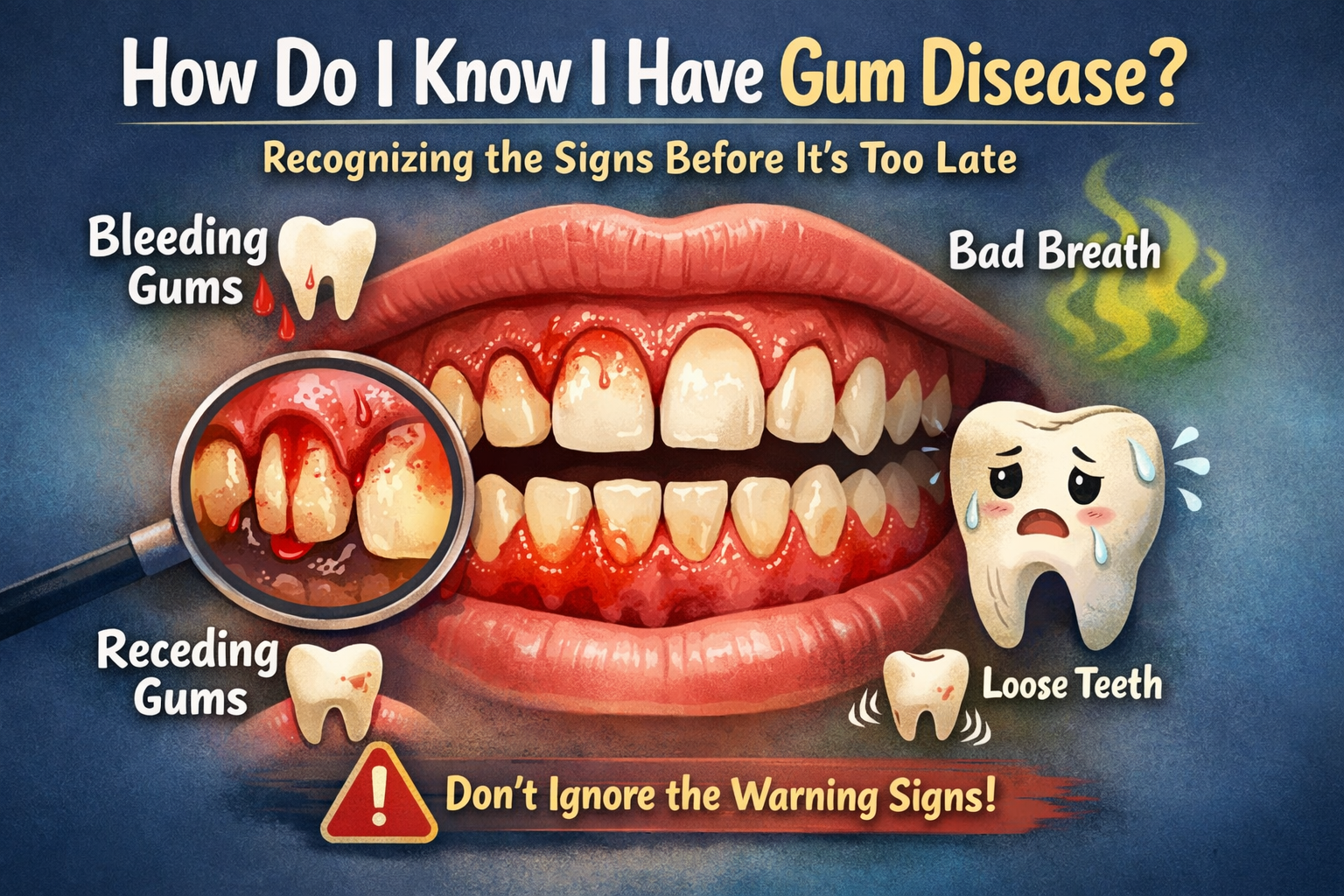
Have you noticed your gums bleeding when you brush? Does your breath smell bad no matter how often you use mouthwash? These seemingly minor issues might be your body’s way of telling you something more serious is happening beneath the surface.
Gum disease affects millions of adults worldwide, yet it’s often called a “silent” condition because it can progress with little pain or obvious warning signs. By the time many people realize they have it, significant damage has already occurred. The question is: how do you know if you have gum disease before it reaches that point?
Let’s explore the telltale signs, symptoms at each stage, and what you should watch for to catch this common oral health problem early.
Understanding Gum Disease (Periodontal Disease)
Gum disease, medically known as periodontal disease, is a bacterial infection that affects the gums and supporting structures of your teeth. It begins when plaque—a sticky, colorless film of bacteria—accumulates along your gumline. If this plaque isn’t removed through regular brushing and flossing, it hardens into tartar, which can only be removed by a dental professional.
The bacteria in plaque and tartar irritate your gum tissue, triggering inflammation and infection. What starts as a minor irritation can progressively damage the soft tissue, bone, and even the roots of your teeth if left untreated.
The challenge with gum disease is that it doesn’t always announce itself with obvious pain or discomfort. You might have it and not even realize it until you’re already at an advanced stage.
The 4 Stages of Gum Disease Progression
Gum disease develops through distinct stages, each with increasingly serious symptoms and consequences.
Stage 1: Gingivitis (Reversible)
Gingivitis is the earliest and mildest form of gum disease. At this stage, the infection is limited to your gum tissue and hasn’t yet affected the underlying bone.
How to know if you have gingivitis:
- Your gums bleed when you brush or floss
- Gums appear abnormally red instead of healthy pink
- You notice swelling or puffiness along your gumline
- Your gums feel tender when you touch them
The good news? Gingivitis is completely reversible with improved oral hygiene and professional dental care.
Stage 2: Slight Periodontal Disease
If gingivitis goes untreated, it advances to the second stage where the infection begins affecting your jawbone. The bone starts to lose density and shrink in a process called resorption.
How to know if you’ve reached this stage:
- You may not notice many new symptoms beyond those from gingivitis
- The changes are happening beneath your gumline where you can’t see them
- Your dentist may detect bone loss on X-rays during your checkup
- Pockets between your gums and teeth begin to deepen (beyond 3mm)
Stage 3: Moderate Periodontal Disease
The third stage brings more noticeable symptoms as both your jawbone and gum tissue continue to deteriorate.
How to know if you have moderate gum disease:
- Your gums are visibly receding, making your teeth look longer
- You experience increased tooth sensitivity, especially to hot and cold
- Your teeth may feel slightly loose when you touch them
- You have persistent bad breath that doesn’t go away
- You might notice pus or discharge around your gumline
Stage 4: Advanced Periodontal Disease
The most severe stage of gum disease often brings symptoms that finally drive people to seek treatment—but by this point, extensive damage has already occurred.
How to know if you have advanced gum disease:
- Your teeth are noticeably loose or have shifted position
- You experience significant pain when chewing or biting
- Your gums have receded dramatically, exposing tooth roots
- You have chronic bad breath and a persistent bad taste in your mouth
- Your bite feels different than it used to
8 Common Warning Signs of Gum Disease
While gum disease progresses through stages, certain symptoms should always raise red flags regardless of severity. Here are the key indicators that something isn’t right with your gum health:
1. Bleeding Gums
Healthy gums don’t bleed. If you consistently see blood when brushing, flossing, or even eating, it’s a clear sign of inflammation and infection.
2. Red, Swollen, or Tender Gums
Do they appear bright red or even purplish instead of a healthy pink? Are they puffy, swollen, or shiny? These are classic signs of inflammation.
3. Persistent Bad Breath (Halitosis)
If you have chronic bad breath that doesn’t improve no matter how much you brush, bacteria trapped beneath your gumline might be the culprit.
4. Receding Gums
Gum recession makes your teeth appear longer. As gums pull away from teeth, they create pockets where more bacteria can accumulate.
5. Increased Tooth Sensitivity
If your teeth suddenly become sensitive to hot or cold temperatures, exposed tooth roots from receding gums could be the cause.
6. Loose or Shifting Teeth
Teeth that feel loose or seem to have changed position are experiencing the effects of bone loss from advanced gum disease.
7. Changes in Your Bite
If your teeth don’t fit together the same way when you close your mouth, underlying bone loss might be changing the structure of your jaw.
8. Pus or Discharge
Any pus, discharge, or oozing around your gums indicates active infection. This requires immediate dental attention.
Why Gum Disease Often Goes Undetected
The insidious nature of gum disease is that it can progress slowly and painlessly. Unlike a cavity that might cause a toothache, gum disease can quietly damage your oral structures for months or even years. This is precisely why regular dental checkups are so critical.
Key Risk Factors for Developing Periodontitis
While anyone can develop gum disease, certain factors increase your risk:
- Poor oral hygiene: The primary cause.
- Smoking and tobacco use: Weakens the immune system and impairs healing.
- Genetics: Some people are simply more prone to gum disease.
- Hormonal changes: Pregnancy and menopause can make gums more vulnerable.
- Chronic conditions: Diabetes and autoimmune disorders increase susceptibility.
- Stress and Poor Nutrition: Both can compromise gum health and healing.
Treatment and Prevention: What to Do Next
If you’ve recognized any of the warning signs in yourself, don’t panic—but don’t ignore them either. Here’s what you should do:
Schedule a Dental Appointment
Make an appointment with your dentist as soon as possible to measure the depth of pockets around your teeth and assess bone health.
Improve Your Oral Hygiene Immediately
Brush twice daily for at least two minutes and floss once daily. Use an antimicrobial mouthwash to help reduce bacteria.
Follow Through with Treatment
Whether it’s deep cleaning (scaling and root planing) or advanced periodontal therapy, stick with the treatment plan.
Conclusion: Listen to Your Gums
Your gums are remarkably good at telling you when something’s wrong. Bleeding, swelling, and sensitivity are your gums’ way of asking for help. Don’t wait until you’re experiencing pain or noticing loose teeth. Early detection and treatment can save your teeth and protect your overall health.


